Two Roads
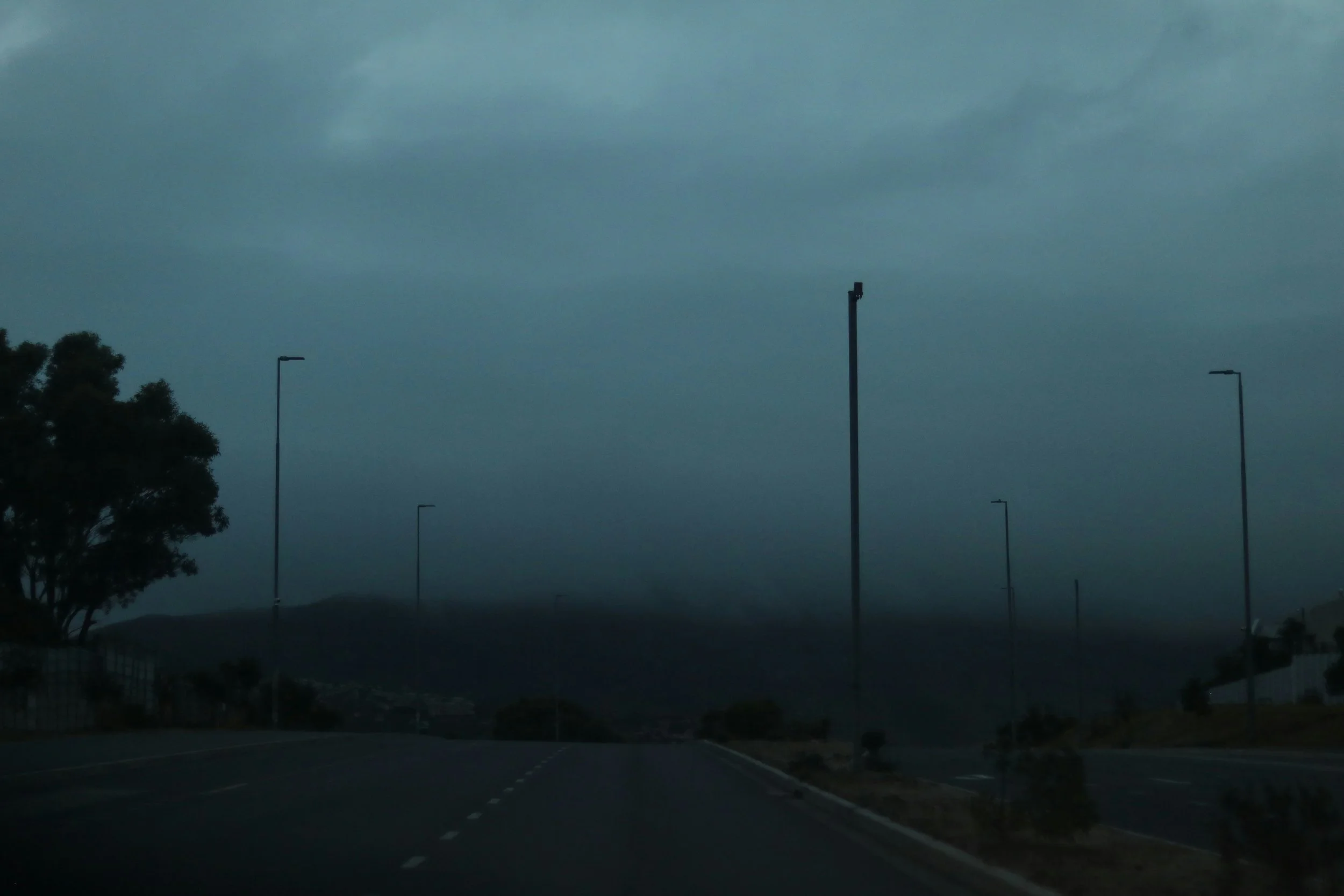
In the Christian life, there are seasons where faith feels steady. There are also seasons where you realize that trust doesn’t come automatically. In some seasons, weights don’t ease overnight, and hard questions don’t resolve easily.
Sometimes, faith is something you find yourself choosing in real-time – slowly, unevenly, and sometimes, with hesitancy. When that’s the case, the pat answers really aren’t good enough. A songwriter I enjoy recently shared in a new release: “old cliches will not do.” I feel that.
I have felt that reality more in recent years.
While it is likely out of mind for many, the fact that my youngest son has a congenital heart defect is something I still live with every day. Walking through the thick of it in his earliest days of life last year was certainly a test of faith. Beyond that, there are older things, too. In the aftermath of one hardship, I have come to recognize that there are other hardships I have moved past as time has moved, but not necessarily worked through yet.
That has me doing a lot more writing lately. I will share some publicly in due time, while still more will remain private. It’s also why I find myself back in counseling.
Though the stigma around it has lessened culturally in recent years, the idea of counseling still conjures up this idea that only the craziest of people with the most unraveling of lives need it. But counseling is not just for when life is unraveling; it is for those who need help to give patient attention to areas that need it. That’s where I’m at. I feel that some things are within me, and they need attention.
Honestly, it is hard to give patient attention to anything these days.
For one, digital accessibility and algorithms have changed our attention spans and even what holds our attention. We are more likely to keep going back to funny short videos for a quick burst of dopamine than we are to ponder why we are bursting with anxiety. We are more interested in an influencer’s perspective on world events than in uncovering what most influences our inner world. Beyond that, life is moving, and in the United States, at least, it often moves fast. Expectations loom, and responsibilities fill in space. Consequently, reflection – the kind that lets you see what’s happening beneath the surface – often gets pushed to the edges, if not out completely.
But certain moments have a way of interrupting that. For me, Good Friday has always been one of them. It is a day when reflection comes more naturally, and thoughts come closer to the surface, making them harder to ignore. Today, I find myself thinking about two roads Jesus walked on, and what it means for me and those of us who seek to follow Him.
The Road to Golgotha
I’ve been thinking about the road to Golgotha, the road that Jesus would walk on the way to the hill He would die on. Mere hours before he walks this deathly road, he visits a garden with His followers:
Matthew 26:36-39 CSB
Then Jesus came with them to a place called Gethsemane, and he told the disciples, “Sit here while I go over there and pray.” Taking along Peter and the two sons of Zebedee, he began to be sorrowful and troubled. He said to them, “I am deeply grieved to the point of death. Remain here and stay awake with me.” Going a little farther, he fell facedown and prayed, “My Father, if it is possible, let this cup pass from me. Yet not as I will, but as you will.”
What strikes me is that Jesus doesn’t stumble onto the Golgotha Road. He chooses it. To be sure, Jesus didn’t choose suffering masochistically. The prayer in the Garden shows us that He took no pleasure in what He would soon endure. He was “deeply grieved,” and pleaded for an alternative. Yet, He still chose obedience, even when it led to suffering. What is glorious and mysterious is His choice isn’t isolated, for it rests inside the will of the Father: “Yet not as I will, but as you will” (vv. 39).
Isaiah 53:10 NIV
Yet it was the Lord’s will to crush him and cause him to suffer, and though the Lord makes his life an offering for sin, he will see his offspring and prolong his days, and the will of the Lord will prosper in his hand.
Jesus chose His suffering, and God the Father willed His suffering. It was not random, karmic, or accidental. This is entrusted suffering. When Jesus calls us to follow Him, He doesn’t really separate us from that pattern:
Luke 9:23-24 CSB
Then he said to them all, “If anyone wants to follow after me, let him deny himself, take up his cross daily, and follow me. For whoever wants to save his life will lose it, but whoever loses his life because of me will save it.
This is not the kind of reflection people want, and it probably won’t make most Good Friday messages this evening! Many messages will rightly focus on Jesus’s sacrifice to pay the debt for sin and free us from that obligation. Praise God for that! But we must not forget that Jesus’s suffering is the model for our own. Though we will not suffer for our salvation, we are entrusted with suffering as the means of sanctification – the purification of our desires, the increasing of our intimacy with God – all of it.
I am not sure I sit with this kind of choosing long enough, often enough. I’ve often wanted the life of Christ without fully reckoning with its nature. I want the benefits of Good Friday without its cost. But, to live as Christ lived is to choose suffering as an act of faith – it is to deny self, and suffer, possibly brutally, in some manner. If not physically, then relationally, or emotionally, or spiritually. Thankfully, cross-bearing is not a test of isolated endurance. Entrusted suffering is also accompanied suffering.
Psalm 23:4 CSB
Even when I go through the darkest valley, I fear no danger, for you are with me; your rod and your staff—they comfort me.
Admittedly, there are days when that line feels like comfort from a distance. But there are other days where it comes juuuust close enough to reach out to and grab ahold of.
The Road to Emmaus
There’s the other road I have been thinking of, too: the road to Emmaus. On this road, two followers of Jesus walked only a few days after the events of Good Friday, trying to make sense of what had happened.
Luke 24:13-16 CSB
Now that same day two of them were on their way to a village called Emmaus, which was about seven miles from Jerusalem. Together they were discussing everything that had taken place. And while they were discussing and arguing, Jesus himself came near and began to walk along with them. But they were prevented from recognizing him.
Here, two followers of Jesus are doing what followers of Jesus often do: discussing and arguing. Today, millennia removed from this moment, we Christians still often discuss and argue amongst ourselves as we try to make sense of following Jesus. Despite this, the posture of Jesus today is the same as it was, then: He comes near and walks with us. This is a glorious reality! Yet just as the men, then, did not recognize Him, sometimes, we do not, either, because we are prevented from doing so.
At times, this is one of the topics of argument we Christians pick up. Were the men prevented because they were sad? Was Jesus’s appearance so different He was physically unrecognizable? Or was this a divine intervention of the Father that veiled the identity of the Son to these men? Truthfully, I don’t think the answer is as important as the insight this experience gives us:
Jesus is always present on the journey, but sometimes, we just don’t see Him. Not because we are failing. Not because we are faithless. But because we are human, and limited, and often walking through more than we even realize. The presence of God is not always the same as the awareness of it. In this, we must learn to be gracious and patient, both with other people and with ourselves, just as Jesus is gracious and patient with these men.
Luke 24:17-21a CSB
Then he asked them, “What is this dispute that you’re having with each other as you are walking?” And they stopped walking and looked discouraged. The one named Cleopas answered him, “Are you the only visitor in Jerusalem who doesn’t know the things that happened there in these days?” What things?” he asked them. So they said to him, “The things concerning Jesus of Nazareth, who was a prophet powerful in action and speech before God and all the people, and how our chief priests and leaders handed him over to be sentenced to death, and they crucified him. But we were hoping that he was the one who was about to redeem Israel…
That last line stands out to me significantly: “we were hoping…”.
The statement is past tense, spoken as a dashed desire amid real, present, felt discouragement. Have you ever been there? I have! And I give these men credit for saying that sentence aloud, because that is often the type of honesty we shy away from. Often, we mask our disappointment and hurt behind cliches and over-spiritualized statements. I used to do this often, and I am learning now to voice my disappointments not as complaints but as laments. These men are being honest with their discouragement, and that’s important.
Equally important, though, is what comes next.
Luke 24:25-33
He said to them, “How foolish you are, and how slow to believe all that the prophets have spoken! Wasn’t it necessary for the Messiah to suffer these things and enter into his glory?” Then, beginning with Moses and all the Prophets, he interpreted for them the things concerning himself in all the Scriptures. They came near the village where they were going, and he gave the impression that he was going farther. But they urged him, “Stay with us, because it’s almost evening, and now the day is almost over.” So he went in to stay with them. It was as he reclined at the table with them that he took the bread, blessed and broke it, and gave it to them. Then their eyes were opened, and they recognized him, but he disappeared from their sight. They said to each other, “Weren’t our hearts burning within us while he was talking with us on the road and explaining the Scriptures to us?”
Just as they are honest with Jesus, Jesus is honest with them! He names their slowness to believe, challenges their understanding, and does not pretend their confusion is clarity. And yet, He remains. He keeps walking with them, along the way explaining Scripture – the very Scriptures they undoubtedly knew very well, but not very fully. Beyond that, He even stays with them, comes to their table, and fellowships with them. In that moment, after the journey and in the staying, the eyes of the followers are opened to who He is.
I find myself deeply encouraged by this road. Jesus challenges me to follow Him, but He follows me on the journey of following Him! Sometimes I don’t recognize Him, but He is there. He walks with me and talks with me. He challenges me, but with grace and patience. He calls me to abide with Him, yet He abides with me. Clarity always comes, even if it comes slowly.
Psalm 23:6 NIV
Surely goodness and mercy shall follow me all the days of my life, and I shall dwell in the house of the Lord forever
In Between
I think a lot of life is lived somewhere between those two roads. There are places where you’re carrying something, where following Jesus is costly in real, hard, deeply felt ways. There are also places where you’re just trying to understand what God is doing, even as you keep moving forward. Sometimes those aren’t separate experiences. More often than not, they happen at the same time.
That’s true for me.
In my life, there are weights I would not have chosen, and confusion I haven’t been able to resolve. There are moments where I can see what God is doing, but there have been, arguably, many more moments – especially recently – where I am prevented from seeing Jesus with me. If I’m honest, part of what’s been most difficult isn’t the circumstances, but what they’ve exposed.
Good Friday doesn’t really resolve any of that.
The nature of the day itself is that things remain unclear, and much is left unfinished. There is no neat tying together, only the reality of suffering, uncertainty, and questions that take time to sort through. And yet, God’s posture remains one of invitation, not expectation. He is not expecting us to resolve it all, He is inviting us to remain.
Stay on the road and keep walking, because Jesus is with you, even when you cannot see Him.
Psalm 23:3 CSB
He renews my life; he leads me along the right paths for his name’s sake.
Maybe, just maybe, these roads – the weight and the waiting, the suffering and the not yet seeing – are all part of the path He is leading us on. Not wasted, not random, and not outside of His care. Even here, Jesus is present. He’s walked these roads before, and He will walk with you on them now.
And that’s Good.